
A single misplaced laptop or unreturned phone can quickly become more than a logistical headache — it’s a potential compliance breach.
For IT and security teams, every endpoint represents a doorway to sensitive data, systems, and clients. When that device goes missing, it’s not just hardware that’s gone; it’s customer trust, regulatory standing, and hours of incident response.
From healthcare providers losing PHI to schools exposing student data, organizations across sectors are learning that visibility over their endpoints is not optional — it’s the difference between a contained event and a public breach.
From lost to breached: how missing devices escalate into data incidents
A stolen or lost device isn’t just an equipment issue — it’s an access point waiting to be exploited. Once out of your control, that endpoint can expose credentials, cached sessions, and confidential data.
Here’s how a simple loss can turn into a full-scale breach:
- Loss or theft: A laptop is left at an airport, or an unreturned contractor device remains active in your system.
- Unauthorized access: Weak PINs or lack of encryption allow entry to local files or synced drives.
- Credential compromise: Attackers reuse saved credentials to infiltrate VPNs, CRMs, or shared storage.
- Lateral movement: With access tokens in hand, they move through internal systems unnoticed.
- Regulatory exposure: The event triggers mandatory reporting, audits, and reputational damage.
The timeline from lost to breached can be just a few hours. And if your organization lacks tracking or remote-lock capabilities, those hours can cost thousands in fines and recovery efforts.
Why endpoints are now a compliance risk
Modern devices carry your organization’s identity — digital certificates, customer databases, API keys, and personal information.
In hybrid or remote settings, these devices are scattered across homes, campuses, and branches. Without centralized visibility, IT loses control over its most valuable assets.
According to HP Wolf Security, one in five remote employees has lost or had a device stolen, and it takes an average of 25 hours before IT is notified. Kensington reports that 76% of organizations have experienced at least one device theft in the last two years — often in remote or hybrid setups.
That delay and lack of visibility are what turn everyday losses into reportable breaches. For regulated sectors, the stakes are even higher:
- Healthcare: Unsecured devices containing PHI can trigger HIPAA breach notifications.
- Education: Missing Chromebooks with student records can violate FERPA.
- Finance: Devices with customer data can breach GDPR or local data-protection laws.
- Public sector: U.S. public agencies face strict expectations around asset control and incident response.
Containment is compliance: why response time matters
Regulatory frameworks like NIST CSF, ISO 27001, and HIPAA Security Rule all share one principle: you can’t protect what you can’t see. Visibility and containment are the foundation of compliance.
A lost device doesn’t have to become a reportable breach — if you can prove that the data was protected and rendered unreadable. Encryption, audit logs, and remote control are the decisive factors auditors look for.
In short:
- No encryption → data exposure.
- No remote lock/wipe → uncontrolled access.
- No incident record → failed audit.
Compliance readiness isn’t just paperwork — it’s operational control.
Preparing your organization for device loss
Even with strict policies and advanced tools, device loss is inevitable — what defines mature organizations is how they prepare for it. A laptop left behind during travel, an unreturned contractor device, or a stolen phone can all trigger a chain of operational and compliance risks.
Preparation isn’t just about having insurance or asset tags; it’s about building the capacity to respond fast, document actions, and prove control.
These are the key aspects to include in your security plan:
- Maintain a live device inventory: Keep a single source of truth for every endpoint — owner, OS, security posture, and last location. Integrate it with your MDM or asset-management system.
- Enforce encryption and secure authentication: Ensure full-disk encryption and complex passcodes. Use MFA that doesn’t rely on SMS to mitigate SIM-swap attacks.
- Train employees to report instantly: Security awareness programs should make “report loss immediately” as instinctive as “reset password.”
- Enable remote lock and wipe: Automated workflows allow IT to act within minutes, not hours — locking or erasing devices remotely to neutralize threats.
- Audit and test regularly: Simulate loss scenarios and document every step. Demonstrating control under stress is a compliance advantage.
Incident response: when a device goes missing
When a device goes missing, time becomes your most valuable resource. Every minute between discovery and action increases the likelihood of unauthorized access, data exposure, or a full-blown breach. Yet many organizations still struggle with fragmented reporting chains, unclear ownership, or slow decision-making — turning what could be a controlled event into a public incident.
A well-defined incident response process for lost or stolen devices ensures your team can move from panic to procedure. It defines who does what, how quickly they act, and how evidence is documented for audits or insurance claims. This is not just about recovery — it’s about demonstrating control and due diligence to regulators, executives, and customers alike.
The following steps outline a structured approach to respond effectively, contain risk, and maintain compliance integrity when an endpoint disappears.
- Alert IT and Security immediately: Early notification triggers a rapid response and containment. Centralized platforms like Prey make this easier by consolidating alerts and enabling your IT or SecOps team to take remote action within minutes — even if the device hasn’t connected recently.
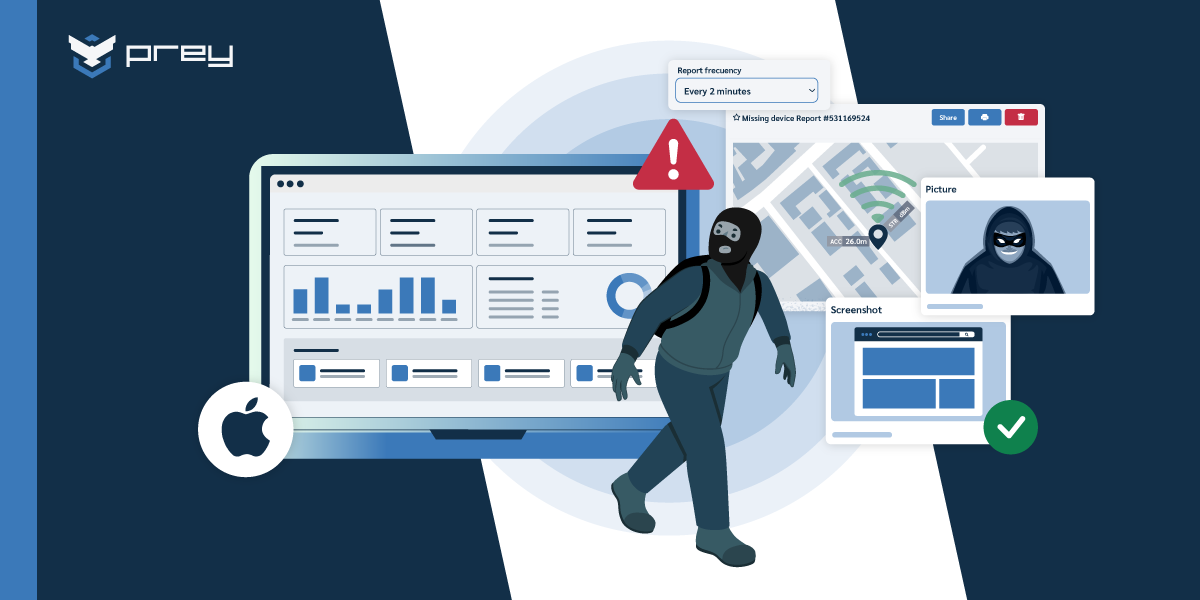
- Track and locate: Utilize tracking tools like Prey’s real-time location and geofencing features to pinpoint movement and identify unauthorized travel patterns. Prey’s evidence reports (including network, hardware, and location data) can support both internal investigations and law enforcement reports.
- Lock or wipe remotely: If the device contains sensitive data or access to regulated systems, immediate containment is critical. Prey’s remote lock and full wipe commands help you block access or securely erase stored information, ensuring compliance with standards like HIPAA, FERPA, and GDPR.
- Revoke credentials: Invalidate sessions, API keys, and tokens tied to that endpoint.
- File the report: Every action taken — from initial report to remote lock or wipe — should be recorded for compliance and audit readiness. Prey automatically generates incident logs and reports, giving your organization a defensible record of containment efforts for regulators or insurance providers.
The difference between a “lost asset” and a “breach” often comes down to how well you can prove control.
Visibility is protection
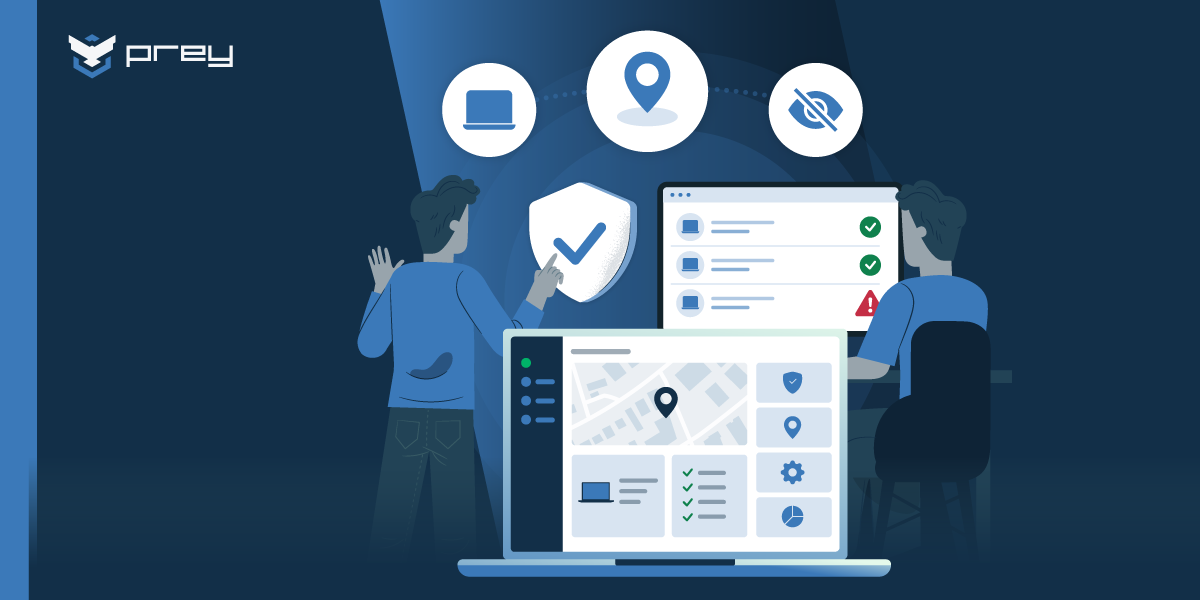
Visibility isn’t just about knowing where your devices are — it’s about knowing what’s happening with them, who’s using them, and how they comply with your organization’s security posture. In a distributed environment where laptops, tablets, and phones constantly move between offices, homes, and countries, this level of oversight is no longer optional — it’s the foundation of operational security.
In a world where a single lost laptop can trigger a compliance audit or a reputational crisis, visibility means more than knowing where a device is — it means knowing your organization is still in control. It’s the difference between reacting to incidents and preventing them altogether.
The Prey advantage: control, compliance, and calm
If you're looking to stay one step ahead of device loss and data exposure, Prey can help. From real-time tracking to remote locking and wiping, Prey gives you the tools to respond quickly and confidently, whether you're managing one device or a whole fleet.
Our platform delivers the visibility and response capabilities you need to prevent, contain, and report incidents effectively.
With Prey, your organization can:
- Locate and recover missing assets in real time.
- Lock or wipe sensitive devices remotely.
- Generate automated incident reports for audits.
- Enforce encryption, geofencing, and security policies across OSs.
- Support compliance with FERPA, HIPAA, GDPR, and Ley 21.663.
More than a tracking tool, Prey is a security partner for IT and compliance teams that need to prove control, demonstrate due diligence, and keep operations running smoothly — no matter where their devices go.
Discover how Prey helps you track, protect, and recover what's yours, anytime, anywhere. Contact us to get started.